
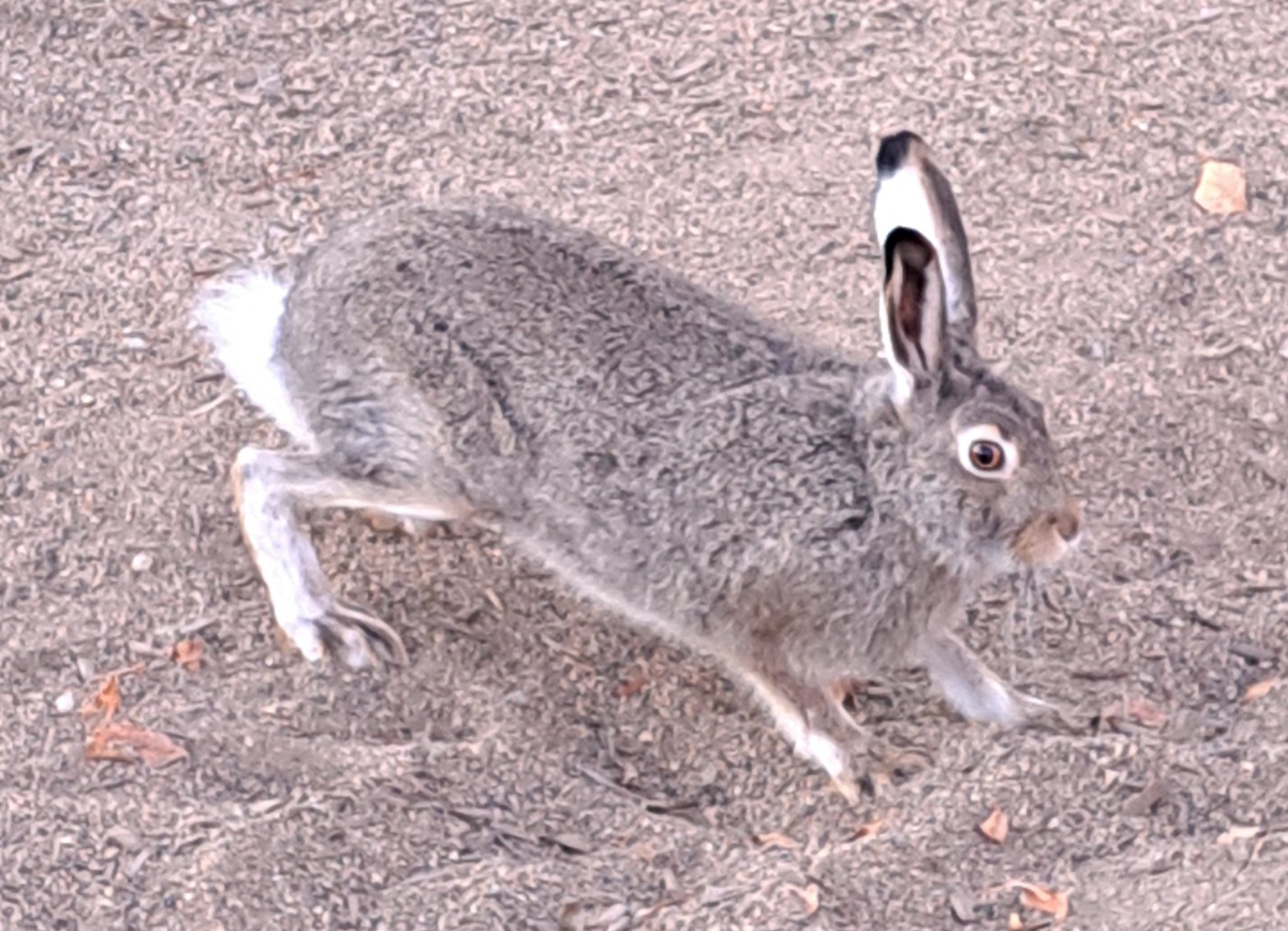
For a snare to work, an animal’s gut instinct must drive it to kill itself. Struggling against the snare is precisely what strangles it.
Snares are ugly things. Anyone who has seen an animal in a snare doesn’t want to talk about it.
The Psalmist recognized a snare’s connection to sin, as did the Prophets. “The snares of death confronted me,” the Psalmist wrote.
The Apostle Paul wrote to his protege, Timothy, about his hopes for those who had strayed to “come to their senses and escape from the snare of the devil, after being captured by him to do his will.”
What snares have been set for you?
Perhaps it is addiction or depression or selfishness. Maybe it’s pride, success, or sex. Whatever it is, we have struggled so hard against the hurt, hang-up, or habit that has driven us to stick our heads in this snare. We are struggling so hard that we are strangling.
Richard Adams’s Watership Down is one of my favorite books. It portrays courage, adventure, danger, friendship, and freedom. Though it is about rabbits, it is not merely a children’s book. In a chapter entitled, “The Shining Wire,” there are snares.
“Bigwig [one of the rabbits] was lying on his side, his back legs kicking and struggling. A length of twisted copper wire, gleaming dully in the first sunlight, was looped around his neck and ran taut across one forepaw to the head of a stout peg driven into the ground,” the story tells.
Bigwig’s friends aren’t sure how to help. They realize that they can’t gnaw through the wire. They must dig out the peg that it is fastened to in order to release the tension that’s killing him.
They dig and bite at the peg in the hole even when they cannot breathe and their noses are bleeding.
Finally, the peg is free, and the snare is loosened. Finally, Bigwig can breathe.
“The immediate sight of him, which should have filled them with relief and joy, brought only terror. They cringed away and none said a word.”
When someone is freed from a snare, do we recoil in terror? Sin is certainly abhorrent, and the reminder of our own frailty and mortality startles us. However, the one rescued needs us just as much when he is freed as when he struggled.
When our brothers and sisters bear testimony to how the Lord has brought them out of the snare and into freedom, let’s listen intently. It may be a clue to us the next time we find ourselves in a snare.
The Psalmist wrote, “For He will deliver you from the snare of the fowler,” “Blessed be the Lord who has not given us as prey to their teeth! We have escaped like a bird from the snare of the fowlers; the snare is broken, and we have escaped!”
Paul reminded Timothy that only God could rescue those held in the snare of the devil, but that He often uses our gentle correction, our kindness, our prayers, and our patience to do it.
In the story, when the rabbits rally around Bigwig again, he tells them, “I’m still alive…so are all of us. You’ve bitten through a bigger peg than this one I’m dragging.”
His fear, his gut instinct, his struggle has been surrendered, and he is free.
The Life we have in Jesus frees us, not just from these worldly snares, but to follow Him in wholeness and confidence.

